LETRS Unit 8 Session 1 Check For Understanding
LETRS Unit 8 Session 1 presents a unique opportunity for teachers to enhance their classroom practices. It emphasizes the importance of systematic phonics instruction, drawing connections between sounds and letters, which is essential for young learners.
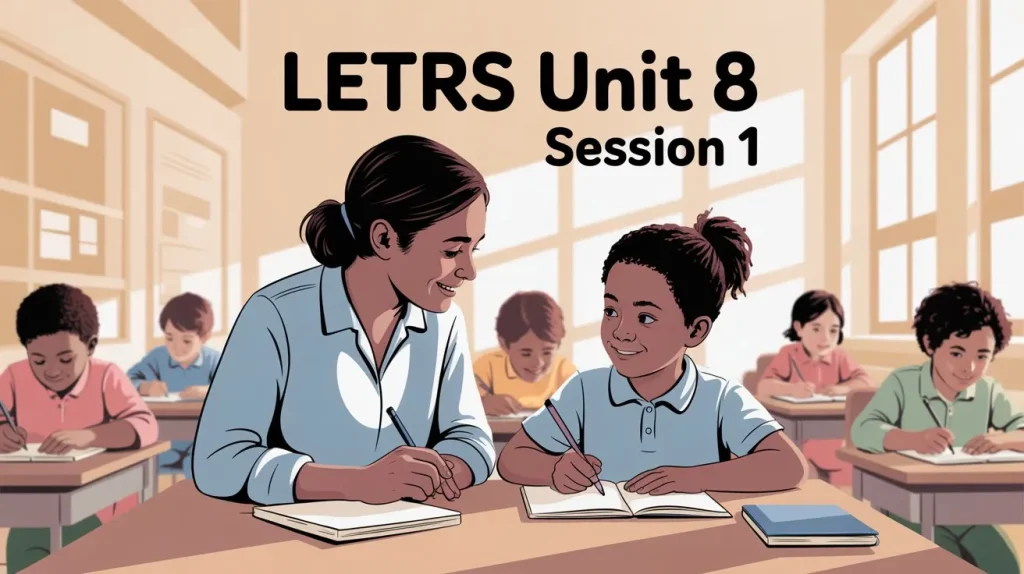
Teachers will explore effective approaches to engage students in meaningful reading experiences, ensuring they not only recognize words but also comprehend their meaning. This session promises to be insightful, packed with practical strategies that can transform the way literacy is taught.
Join us as we unpack the key insights from LETRS Unit 8 Session 1 and discover how they can make a significant difference in your teaching journey.
Understanding Literacy Through LETRS Unit 8 Session 1
What are the benefits of having students write in response to text?
Answer:
It encourages students to think about what they have learned; It allows students to make connections between ideas; It gives students the opportunity to rephrase concepts in their own words.
Explanation:
When students write in response to texts, they engage in a deeper cognitive process that enhances their understanding. Reflective writing helps solidify knowledge and encourages critical thinking. Furthermore, paraphrasing aids in retention and demonstrates comprehension of the material.
According to the Simple View of Writing, which two categories of skills must students learn to become successful?
Answer:
basic skills; advanced composition skills
Explanation:
To succeed in writing, students need to develop foundational skills, such as grammar and spelling, as well as higher-order skills related to organizing and expressing complex ideas. These competencies are crucial for effective communication in writing.
According to research, which of the following are best practices for writing instruction?
Answer:
Allowing students to write daily; explicitly teaching the writing process steps; designing cooperative and interactive writing tasks.
Explanation:
Research shows that consistent practice enhances writing abilities, while explicit instruction provides clarity in the writing process. Additionally, collaborative tasks foster engagement and can lead to improved writing outcomes through shared learning experiences.
What statement best describes effective writing instruction?
Answer:
It combines instruction in foundational skills with composition strategies.
Explanation:
Effective writing instruction integrates teaching the necessary building blocks of writing—like grammar and structure—with the art of composing coherent and persuasive texts. This holistic approach ensures that students are well-equipped to succeed in multiple writing contexts.
Which statement is not true?
Answer:
Writing leads to improved spelling and retention of words.
Explanation:
This statement is inaccurate as it implies a direct causal relationship where writing might not significantly affect spelling or memory retention. Research indicates that while writing can reinforce learning, it does not automatically guarantee improvements in these areas without targeted practice.
Also Visit:
LETRS Unit 8 Session 1: Building Teacher Knowledge About Reading Assessment and Why It Changes Instruction
There’s something every teacher eventually learns the hard way: what you think a student can do and what they can actually do are sometimes miles apart. I remember giving a reading passage to a student who answered every comprehension question correctly… until I realized he’d simply memorized the story from hearing it before. His decoding skills were still shaky, but I never would’ve known without the right assessment.
LETRS Unit 8 Session 1 focuses on exactly this problem — helping teachers understand how to use reading assessments wisely, accurately, and with real purpose. This session shifts assessment from “collecting scores” to actually understanding readers.
What LETRS Unit 8 Session 1 Focuses On
Session 1 explains the different kinds of reading assessments and how they serve different instructional goals. It teaches teachers to interpret results with precision instead of guessing or relying on raw scores alone.
This session covers:
- the purpose of assessment in reading instruction
- differences between screening, diagnostic, progress monitoring, and summative assessments
- how to choose the right tool for the right purpose
- how to make instructional decisions based on data
- recognizing strengths and weaknesses across components of reading
- avoiding common interpretation mistakes
It’s about reading students accurately, not statistically.
Why This Session Matters for Teachers
If assessments are misunderstood, instruction gets misaligned.
You end up teaching phonics to a kid who actually struggles with vocabulary… or focusing on comprehension for a child whose real barrier is decoding. And suddenly, progress stalls.
This session helps teachers:
- figure out why a child is struggling
- avoid relying on intuition alone
- use screening data to catch issues early
- choose targeted interventions based on needs
- track progress without drowning in paperwork
- understand the science behind assessment
Accurate assessment is the foundation of effective instruction.
The Four Major Types of Assessments Explained in Session 1
1. Screening Assessments
The goal is simple:
Identify which students may be at risk.
These assessments are:
- quick
- efficient
- administered to all students
- used early in the year
They don’t diagnose — they alert.
2. Diagnostic Assessments
When screening shows a concern, diagnostics answer the question:
What exactly is the problem?
Diagnostic tools break reading into subskills, such as:
- phonemic awareness
- decoding
- fluency
- vocabulary
- comprehension
These assessments guide targeted instruction.
3. Progress Monitoring
These assessments track how well a student is responding to instruction over time.
They help teachers decide:
- whether the child is improving
- if instruction needs adjustment
- whether a different intervention is necessary
The goal isn’t a score — it’s growth.
4. Summative Assessments
These are the big end-of-year or end-of-unit tests.
Their purpose is to measure achievement, not diagnose problems.
They help evaluate program effectiveness, not day-to-day instruction.
Common Mistakes That Session 1 Helps Teachers Avoid
Using the wrong assessment for the wrong purpose
For example, relying on a summative test to diagnose a phonics difficulty.
Teaching to the test
Students improve scores but not skills.
Relying only on comprehension assessments
These often mask foundational reading issues.
Ignoring patterns in data
Teachers may look at scores without asking why a student performed that way.
Not intervening early enough
Early screening data is crucial — waiting rarely helps.
How Teachers Use Assessment Data in Instruction (Session 1 Approach)
Step 1: Screen Early
Identify students who may need closer attention.
Step 2: Diagnose Specifically
Use diagnostic assessments to pinpoint exactly which skill is weak.
Step 3: Set Clear Instructional Goals
Short, precise, measurable.
Step 4: Monitor Progress Regularly
Check if instruction is working before weeks go by.
Step 5: Adjust Instruction Based on Results
If progress stalls, the instruction changes — not the student.
Step 6: Reflect on Whole-Class Patterns
Sometimes the issue is class-wide, not individual.
Classroom Example From Session 1
A 2nd-grade student scores below benchmark on a fluency screening.
Instead of assuming fluency is the problem, the teacher looks deeper:
- decoding accuracy is low
- multisyllabic words break down
- phonics gaps appear in diagnostics
The real issue wasn’t fluency — it was decoding.
After targeted phonics intervention, fluency rises naturally.
This is why assessment literacy matters.
Teacher-Lived Insight Reinforced in Session 1
I’ve had students who looked fluent because they read quickly.
But when I asked them to read unfamiliar, decodable text, the truth came out: they were guessing. A quick diagnostic changed the entire course of instruction.
As literacy researchers often remind us:
“Assessment is only useful when it leads to informed action.”
That sentence could be the motto of Session 1.
What Growth Looks Like After Session 1
Teachers begin to:
- choose assessments intentionally
- spot reading difficulties earlier
- pair instruction with specific student needs
- stop wasting time on ineffective practices
- feel more confident in interpreting data
- tailor interventions that actually work
Students benefit immediately because instruction becomes targeted instead of generic.
Conclusion
LETRS Unit 8 Session 1 helps teachers understand reading assessment as a practical tool, not a spreadsheet task. By learning how to choose, interpret, and act on assessment data, teachers can identify student needs earlier and respond with precision.
Accurate assessment leads to meaningful instruction — and meaningful instruction leads to measurable progress.
