LETRS UNIT 3 SESSION 8 Check for Understanding
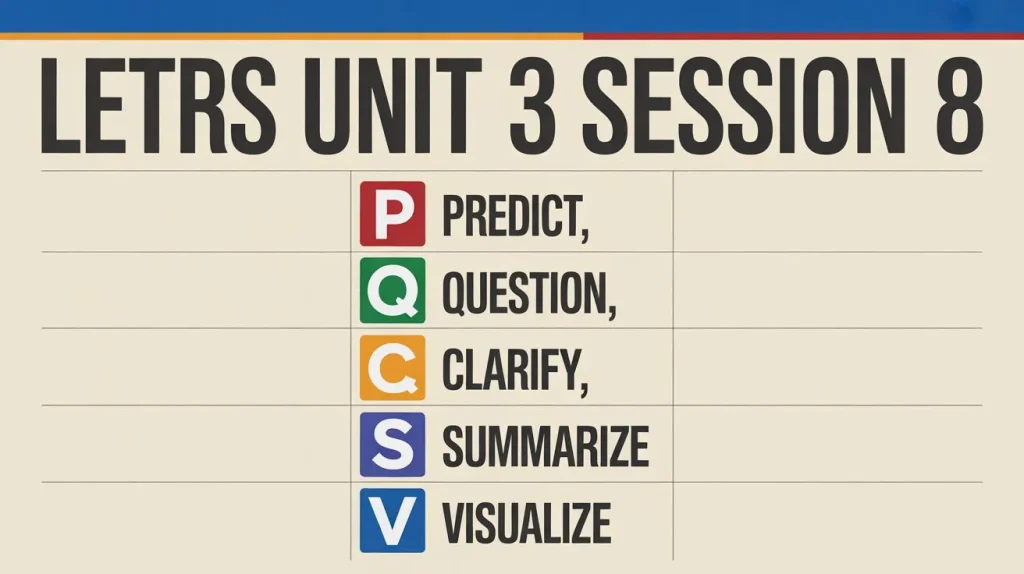
This LETRS UNIT 3 SESSION 8 session dives deep into the key concepts of effective literacy instruction, helping educators assess their comprehension and application of critical strategies.
Through engaging activities and guided discussions, participants will uncover essential tools to ensure that students not only learn but also master reading and writing skills. The focus on checking for understanding helps teachers identify areas where learners may be struggling, enabling targeted support that promotes growth and confidence.
Join us as we explore the vital components of LETRS UNIT 3 SESSION 8 Check for Understanding, empowering educators to create a more effective and responsive classroom environment. Together, we can make literacy learning accessible and enjoyable for every student.
Understanding LETRS UNIT 3 SESSION 8: Key Insights for Educators
Question?
The quality of Tier 2 and Tier 3 instruction is the most important variable affecting student progress in grades K-3.
Answer:
false
Explanation:
While Tier 2 and Tier 3 instruction is significant, various other factors also contribute to student progress, such as Tier 1 instruction quality, teacher efficacy, and student engagement. Therefore, it is not accurate to claim that only Tier 2 and Tier 3 instruction is the most critical element.
Question?
Successful implementation of an RTI or MTSS model depends on collaboration among all faculty.
Answer:
true
Explanation:
Collaboration among faculty members is essential for effective implementation of models like RTI and MTSS. When teachers work together, they can share insights, strategies, and resources, leading to improved outcomes for students across different tiers of instruction.
Question?
What proportion of students are likely to need Tier 2 or Tier 3 instruction even when Tier 1 instruction is effective?
Answer:
c. at least 20%
Explanation:
Research indicates that even in effective Tier 1 instruction environments, a significant portion of students—up to 20%—may still require additional support from Tier 2 or Tier 3 interventions. This highlights the need for targeted assistance to ensure all students achieve their academic potential.
Question?
Based on the assessment data presented in this session, what can you conclude about how teachers’ professional development (PD) affects students’ performance outcomes?
Answer:
d. PD to build teacher expertise and provide coaching supports significantly improved student performance.
Explanation:
Professional development that enhances teacher skills and offers coaching has been shown to have a positive impact on student performance. Effective PD equips educators with strategies and tools that can translate into better instructional practices and improved learning outcomes for students.
Question?
Your district has selected a solid, research-based core instructional program for reading. Which guideline best explains how an individual teacher should implement this program?
Answer:
b. Follow it, but if necessary supplement it, or adjust the pacing to meet students’ needs.
Explanation:
Teachers are encouraged to adhere to the instructional program while also being flexible enough to adapt it to the specific needs of their students. This approach allows for both fidelity to the program and responsiveness to learners’ diverse abilities and requirements, ensuring a more personalized learning experience.
You may also visit:
| LETRS Unit 4 Session 1 |
| LETRS Unit 4 Session 2 |
| LETRS Unit 4 Session 3 |
| LETRS Unit 4 Session 4 |
| LETRS Unit 4 Session 5 |
| LETRS Unit 4 Session 6 |
| LETRS Unit 4 Session 7 |
| LETRS Unit 4 Session 8 |
LETRS Unit 3 Session 8: Celebrating Language — Morphology in Mastery
Some days in teaching feel like ordinary days. Then there are days when you see a child’s confidence bloom, and everything makes sense.
That’s what LETRS Unit 3, Session 8 is about — taking all the morphology knowledge students have gained and turning it into real, usable reading and writing power. It’s about seeing children trust themselves with words.
The Heart of This Session
Unit 3, Session 8 isn’t just a review. It’s about applying everything from prefixes, roots, and suffixes to real reading, writing, and comprehension situations. Teachers learn to:
- Guide students to analyze and understand complex words independently.
- Connect word structure to meaning, spelling, and writing fluency.
- Encourage students to explore unfamiliar words with curiosity, not fear.
- Celebrate the aha moments when students realize they can decode words on their own.
It’s the session where morphology truly comes alive in the classroom.
A Classroom Story That Stayed With Me
I remember a quiet student, Sofia, who often whispered when reading aloud. Words like uncharacteristically or misinterpretation would freeze her in place.
During a small group activity, we broke down these words together:
- Un–character–istically → not + traits + adverb
- Mis–interpret–ation → wrongly + understand + noun
Her eyes widened as she whispered each part aloud. Then she smiled. “I… I can read it!”
Later that week, she confidently read a passage full of complex words without hesitation. Watching her transformation reminded me why LETRS emphasizes morphology: it’s more than reading—it’s about independence, pride, and empowerment.
Why This Session Matters
- Vocabulary mastery: Students can tackle hundreds of unfamiliar words using strategies, not memorization.
- Reading comprehension grows: Word analysis gives meaning to sentences and paragraphs.
- Spelling improves naturally: Students understand patterns instead of guessing.
- Confidence soars: Students approach challenging texts with curiosity instead of fear.
Unit 3, Session 8 proves that morphology isn’t just a skill — it’s a tool for thinking, problem-solving, and growth.
Practical Tips for Teachers
- Celebrate every decoding success — even small words count.
- Integrate morphology exercises across all subjects to reinforce learning.
- Encourage students to teach each other word parts — peer teaching reinforces mastery.
- Have students create their own words using known roots and affixes — it’s fun and memorable.
Even brief, daily practice empowers students to tackle reading challenges confidently.
Reflection: Why Morphology Changes Everything
Teaching Unit 3, Session 8 reminded me that literacy is more than reading words correctly. It’s about helping children feel capable, curious, and confident.
When Sofia read that complex passage effortlessly, I realized morphology isn’t just instruction — it’s empowerment. It gives students the freedom to explore language, the joy of discovery, and the pride of mastering something challenging.
